


Written by Sheila in collaboration with Eve.
My dear friend Eve is going to die on July 10, 2026. Just as she’s led her life, she is doing this on her own terms.
Most of us are taught from an early age to fear death, and it remains a topic many people still struggle to talk about openly. Which is strange when you think about it, because dying is something none of us will avoid. For those who choose to meet it on their own terms, that choice can be both empowering and deeply dignified.
For the past decade, Canadians have had the legal right to choose how they die. Medical Assistance in Dying, or MAID, is a carefully regulated process with strict eligibility requirements. But for those who qualify, and for the people who love them, it is often experienced as a profound gift rather than a loss. It offers a way to avoid prolonged suffering, to say goodbye with clarity, and to spare loved ones the weight of watching someone they care about enduring pain without end.
This is Eve’s story. While it’s impossible to capture everything she is and all she has meant to those fortunate enough to know her, I am honoured she has trusted me to share it. She hopes it will offer comfort, clarity, or courage to other Canadians who are considering MAID, or who are walking alongside someone facing that decision.
What Is MAID?
MAID has been legal in Canada since 2016. It allows eligible individuals to receive assistance in ending their life under Canadian law.
To qualify, a person must be an adult of sound mind facing a serious, irreversible medical condition that causes intolerable suffering. The rigorous process requires two independent clinical assessments and a formal written request. Crucially, they can withdraw consent at any moment, remaining in control throughout.
Eve has been a member of Dying with Dignity Canada, a national charity founded in 1980 to advocate for end-of-life rights, for many years.
Meet Eve: The early years
Eve was born Eva on November 9, 1931, in Gotha, Germany. She has always preferred Eve, though she’ll tell you with a smile that “Eva” still comes out when someone is truly cross with her.
By the time she was a young child, Europe was fracturing. She was one of about 500 children sent on the Kindertransport to Sweden, where she lived in the small town of Hoor with a family she remembers as deeply loving.
“Mamma, Eva, Pappa Jacob,” she recalls. The family called her Effi.
She still thinks of Sweden as home. Not because of geography, but because to her this home meant being safe, fed, and loved without condition.
In 1943, she flew from Sweden to Edinburgh, where she and her sister, Ilse, reunited with their father before travelling to London. At one point the plane came under fire and had to turn back. Eve has no conscious memory of this but shares it as simply another reality of her long and resilient life.
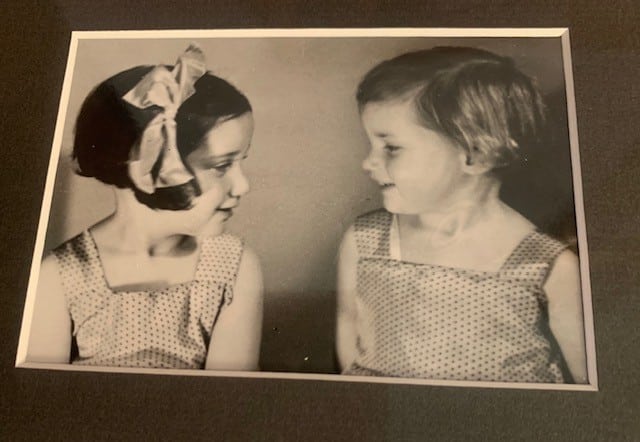
Back in London, the war was still going strong, with bombs falling, food and petrol rationed, men away in the army, and the women holding the fort. She and her sister Ilse walked to school most days, until one morning they took the Underground instead, just one or two stops.
A bomb fell exactly where they would have been walking.
The “doodlebugs” were the worst of it, she says. Pilotless Nazi aircraft that flew until they ran out of fuel and then simply fell. She remembers watching one come out of the sky after the engine went quiet. The windows blew in and cut her deeply in the knee. She waited a long time in an ambulance before anyone could attend to her.
These difficult moments shaped her early years, yet she still found a path to lasting happiness and purpose.
In 1955, Eve moved to Canada, where she met her husband, Allan Sheftel.
She met her husband Allan at a Rosh Hashanah dinner in Calgary at the home of Harriet Sheftel. She saw him across the room and thought, quite simply: “Him I want.” There were objections from his family. She was four years older; nobody knew her family and his parents had other ideas about who he should marry.
None of that mattered to them and they began dating.
“One time Allan offered to let me drive his very new, yellow, Pontiac Convertible and though I did say I could not drive he urged me to take the wheel. I ran right into a bridge and, of course, dented the front end but, no anger, nothing! I believe this was one of the tenets of our long relationship, that he would never get angry and argue,” reflects Eve.
Eve’s Why
She spent the following years managing her household and raising her sons, Steve and David, navigating family moves from Calgary to Pennsylvania, Toronto, and back to Calgary, before starting her nursing career in Burlington, ON and eventually settling in Vancouver.
Throughout these busy years, Eve frequently travelled to Europe to maintain her deep connections with family. It was during a trip to Sweden for her foster mother’s funeral that her calling toward end-of-life care truly began to take shape.
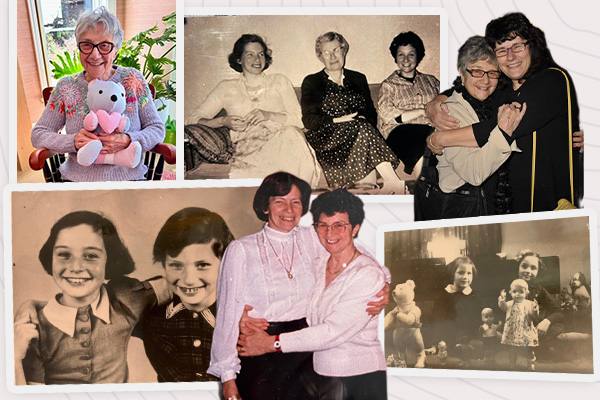
“At the funeral I remember my foster sister saying, ‘Don’t cry, you’ll upset Pappa’. And I thought to myself, he’s supposed to get upset, his wife just died.”
The clinical approach to loss at the time felt deeply wrong to her. “In retrospect, I didn’t feel comfortable with the way we were made to grieve. The hospital just kept giving us tranquilizers to numb the pain.”
This experience sparked a profound shift. Seeking a more compassionate way to support others through loss, Eve returned to school to earn her nursing degree, dedicating her career to the vital work of palliative care. (Source: Newsom, P. (n.d.). Women at Work.)
Eve trained as a palliative care nurse in Toronto as well as Montreal, connecting with incredible pioneers in the field. Yet, her calling became clear during a one-month traineeship in the palliative care ward of Montreal’s Royal Victoria Hospital.
“I remember I stood in the corridor and said — this is for me — this is where I am meant to be,” said Eve, who felt most drawn to the psychosocial side of nursing.
She was comfortable with dying patients, honouring their honest feelings and learning from them. She recalls returning to the room of a patient, devastated that she had died while Eve was away. “She died on her time, Eve. Not yours,” the Head Nurse had told her.
Eve quickly learned that palliative care required balancing medical needs with the lighthearted moments that keep us human.
She attended her patients’ funerals and spoke honestly with families about death. Yet, there was also plenty of humor. Once, after she sang to a patient, they dryly told her, “I may be dying, but I don’t have to put up with your singing,” a memory Eve recalls fondly, appreciating a dry wit that matched her own.
Beyond her work, death has also touched Eve’s personal life, as it eventually does for all of us. Eve had been present at many family members’ deaths, and when her husband received a terminal diagnosis, she was by his side for the two years he had left.
“If he had asked me to help him to die, I believe with all my heart I would have found a way to ease his suffering and die in peace,” she says of her husband, who died in 2007.
Eve also shared a deeply close relationship with her sister, Ilse, who resided in Boston. When Ilse’s Parkinson’s disease progressed, her death affected Eve in a way that did not compare to any that came before. She and Ilse had endured so much pain and loneliness together that their bond ran deeper than words could capture.
“I am not afraid of death. I have faced it many times and I am pleased to see changes that allow us to choose our exit.”
A Life of Purpose
After Allan was gone, Eve did not slow down. She offered to create a support group for Jewish widows in Vancouver. At 82, she enrolled and completed the peer counsellor certificate course at UBC, where I was lucky enough to meet her.
In late 2014, she became a Health Mentor through UBC’s Interprofessional Health Mentors Program. She has mentored twelve cohorts of students from multiple different health disciplines, welcoming them into her home and her life. She has spoken on palliative care panels, been filmed for a Living Library video used by students at UBC and BCIT, and made a quiet, lasting impression on hundreds of young clinicians.
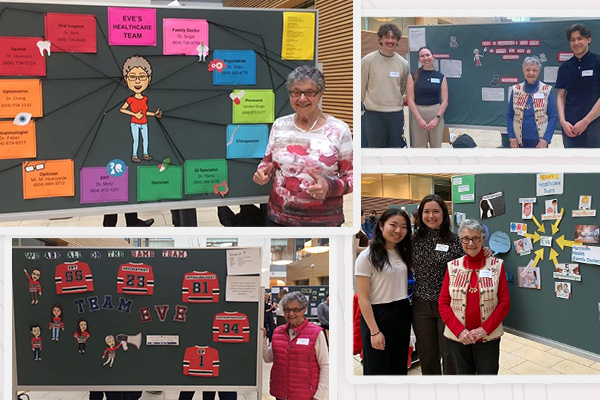
At 90, Eve was still an active volunteer at VGH in the Palliative Care Unit and a member of Dying with Dignity. By that time, she was very clear about choosing MAID when the time came.
In 2023, she received the R. Paul Kerston Community Educator Award from UBC Health, which recognizes outstanding community educators who have expanded student learning beyond traditional professional boundaries. The citation notes her “particular passion for end-of-life care” and her role as “a strong advocate for dying with dignity.”
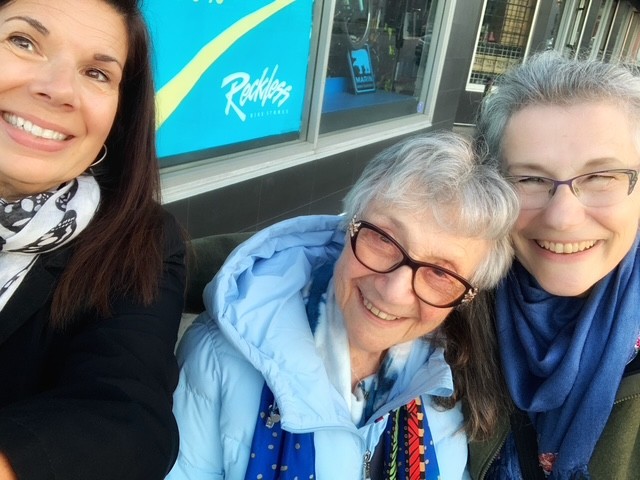
Now at 94, Eve lives independently in a condo overlooking Granville Island, surrounded by friends and family who love her. She remains sharp, curious, and wonderfully herself, with a sense of humor and depth of knowledge that have left a mark on everyone fortunate enough to know her. Eve is a connector. She has a special warm and natural skill of bringing people together. She has a young spirit which we all believe is due to her intelligence and curiosity. She does not like being called an inspiration, though it is hard to think of a better word.
So, How Did We Get Here?
Her hip fracture happened the way these things usually do: suddenly, and with consequences nobody could fully predict. Eve fell, fractured her left hip, and found herself admitted to St. Paul’s Hospital. While there, she developed shingles and a staph infection.
She describes it as the two worst months of her life. Not because of the physical pain, though that was significant. Because of the loss of agency and the sense that she was being managed.
Dr. Bentley and RN Mya from her Harrison Healthcare team came to visit her at St. Paul’s while she was in isolation with shingles. They put on gowns and gloves and came in anyway. That gesture moved her deeply, reminding her of what it felt like to be seen as a person who mattered rather than a patient.
“It was inspiring to see someone in their nineties still actively teaching and mentoring the next generation of healthcare professionals,” Dr. Bentley reflects. “Eve reminded me how vital it is that we truly listen. It is not just about gathering clinical information; it is about listening to understand,” says Dr. Bentley, reflecting on the lasting impact Eve has had.
Eve has long believed that good healthcare begins with seeing the person before the illness. It is one of the reasons she felt such gratitude for the care she received from her Harrison team. In a system that can so often feel rushed or impersonal, she found warmth, dignity, and human connection there.
Yet, even the most compassionate care cannot halt the natural slowing down of the body. After the fractures and infections came a pacemaker, bringing with it the difficult reality of a body that has worked hard for 94 years and is finally showing the math. Today, she lives with constant pain, knowing that her physical health will not improve.
“I’m sure I did not survive this long,” she told me, “to just sit around and watch TV and drink tea.”
Choosing MAID
She began speaking more openly about being ready to die.
“I have a horrific fear of being put into a “home.” It would mean being moved and having no more control over my life.”
Most of her family and friends were supportive, but as one can imagine, there were some folks who would say things like: ‘don’t be silly, you will live until you are 100’ to which she would respond, ‘I do not want to live until I am 100!’. Or they would say ‘you don’t even look 94’ and she would respond ‘what does 94 look like?’
When someone is so open about their situation and at peace about dying, all we can do is to respect their wishes. Eve has been a pillar of strength for most of her life, and she has earned much respect as a person, a mentor and a friend.
Her care team saw that same clarity in her.
“Eve told me, very plainly, ‘be glad for me. This is what I want.’ That sentiment captures her. She is wickedly funny, sharp, and refreshingly direct. She has approached this decision with clarity, and I fully support her choice,” says Dr. Tasha Bienert, a Harrison physician on Eve’s team.
“I hope this would be an honourable way to leave my life. I hope to have “gone gently into the good night” and that the boys will remember me with love,” Eve says, referring to her sons, Steve and David.
Her date is July 10, 2026. Her favourite niece (FN) Miriam will fly in from Boston on July 8 and be at her side.
How Does One Spend Their Final Days?
With a beautiful tea party hosted by the neighbours in her building who have become more like family. With intimate dinners, visits, and a standing breakfast at Granville Island twice a week with a wonderful group of friends. Her days are filled with incoming love: steady streams of texts and emails from friends, a lot of hugs and FaceTime calls with family who are far away.

She is doing what she has always done: being present with the people she cares about, saying what she means, and eating chocolate and donuts (and maybe some healthy bits in between).
Legacy: The Bears
Eve collects teddy bears. The collection began with Nalle, a bear from her childhood in Sweden. At one point during the war, when she was evacuated from her home because of a fire, she thought she had lost him, but luckily, he was still there when she returned home. She will give Nalle to her niece Miriam. Over the decades, the bears multiplied. They all have stories and histories, the way objects do when they are loved for a long time.
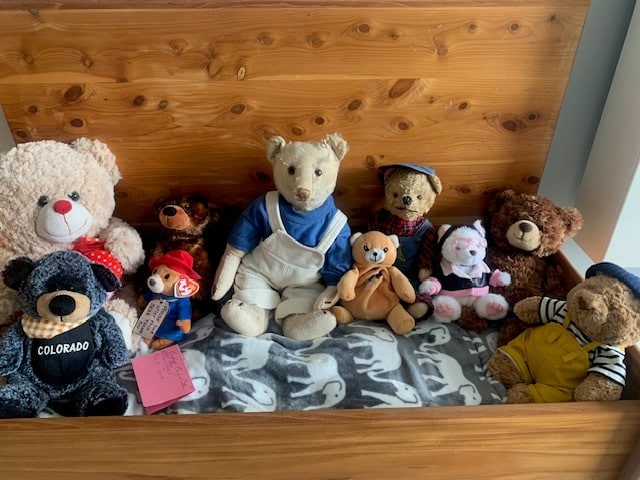
She is giving them away now. Carefully, intentionally, one by one to people who will understand the importance of what they are receiving.
What We Can Learn From Eve About Living Fully
- Listen to understand, not to respond.
- Always be curious – question and learn and then share the lessons.
- Practice gratitude, give to others and be present.
- Do not be afraid to say the word “died”.
- For medical professionals: always see and treat the person, not the illness or their symptoms.
- In friendship there is always give and take – sometimes one person needs more support than the other.
- Don’t be an “energy vampire” – negative energy can be contagious and drain the people around you.
- Do not be afraid of technology (at 94, I receive more texts from her than anyone else).
- Enjoy the donuts and chocolate!
- Accept help. It took her years to do this, but she now embraces support.
- Teddy Bears are the best!
- Buy the shoes and never be afraid of some “bling”.
On her own terms
Eve will die on her own terms, on a date she chose, with the people she loves nearby and a full life she has lived behind her.
If you are navigating these questions for yourself or someone you love, Dying with Dignity Canada offers information, resources, and community. Your provincial health authority can connect you with a MAID assessment. You do not have to figure this out alone.
Eve Sheftel, Mother, Wife, Aunt, Friend, Sister, Daughter, RN, UBC Health Mentor, a 2023 recipient of the R. Paul Kerston Community Educator Award, and a long-time advocate for end-of-life care and dying with dignity. This piece was written with her knowledge, her input, and her blessing.

